Why Our First Dinner Party Began With Copper Barware
"A warm newlywed story about copper barware, candlelit tables, signature drinks, and choosing registry pieces made for a lifetime of hosting."

Why should you use copper barware for a first dinner party?
Copper barware gives a first dinner party an inviting focal point, reflects candlelight beautifully, and makes simple drink service feel ceremonial. A coordinated pitcher and cup set also reduces hosting stress by supporting pre-batched beverages, easy refills, and a cohesive tablescape that feels elevated without becoming formal.
- Use a polished copper pitcher as the warm focal point of a candlelit table.
- Prepare one chilled signature drink before guests arrive to simplify service.
- Choose versatile registry pieces that support everyday use and future celebrations.
Our First Dinner Party Needed a Beginning
Our first dinner party as newlyweds began before anyone rang the bell. It began while we were still deciding where the wedding gifts should live, which chairs could be borrowed, and whether six mismatched napkins looked charming or simply mismatched. In the center of that cheerful uncertainty stood our copper barware, catching the late-afternoon light and making the dining room feel ready before we did.
We had invited close friends rather than an impressive crowd, but the evening still felt momentous. This was the first time we were welcoming people into a home that belonged to both of us, with traditions we had not yet invented and a table that was still becoming our own. The smooth copper pitcher, cups, and shot glass gave us a visual anchor: warm, useful, celebratory, and quietly confident.
Why Copper Became the Heart of the Table
Copper has a presence that few entertaining materials can imitate. Its glow is softer than silver, warmer than stainless steel, and more alive than a painted finish because it changes subtly with the light and with time. As Britannica’s overview of copper explains, the metal has accompanied human craft for thousands of years, giving it a sense of history that feels especially appropriate at the beginning of a marriage.
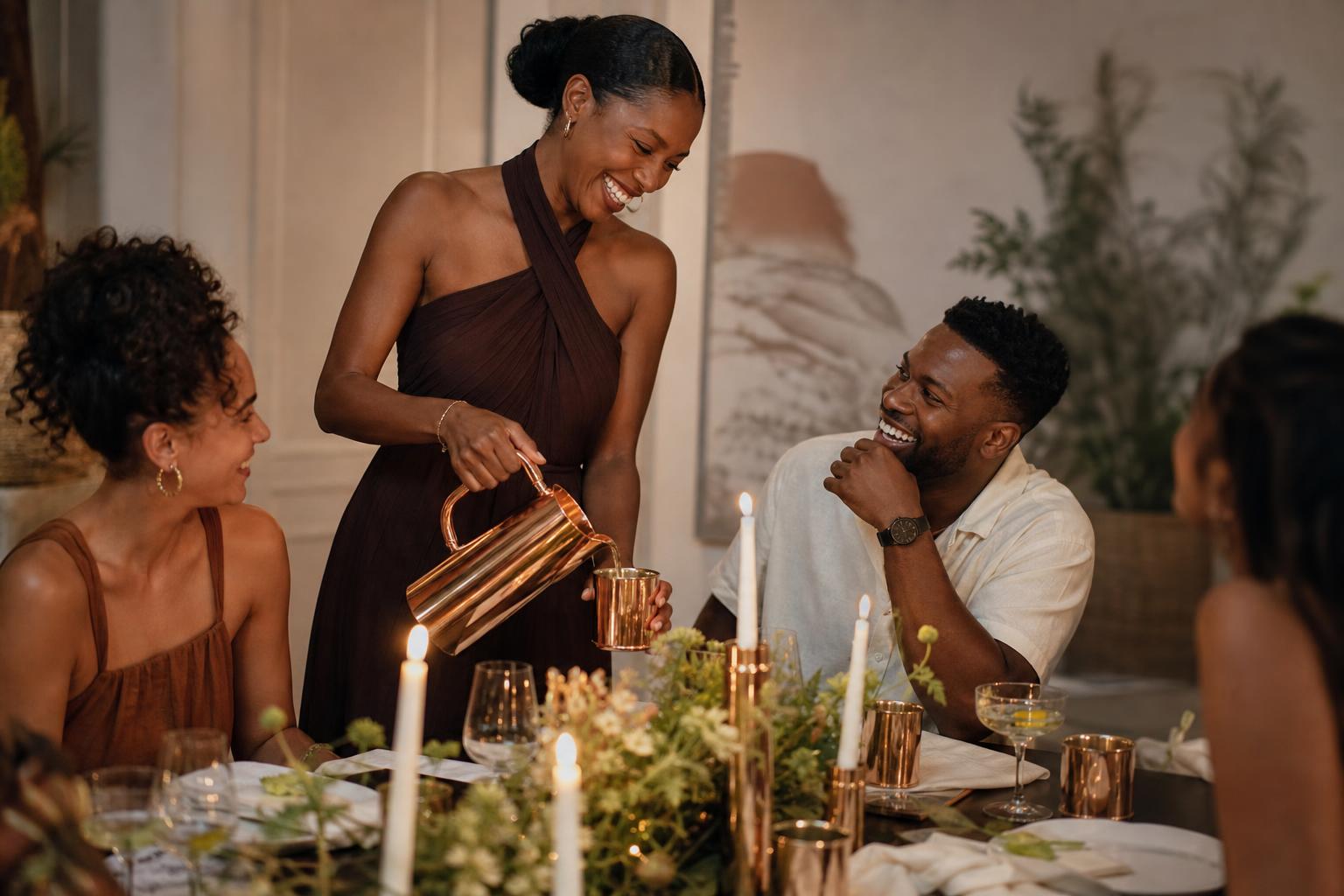
We placed the pitcher at the center of the table instead of hiding drinks in the kitchen. Its polished surface reflected candle flames, greenery, and the movement of guests reaching across the table. The effect was not formal, but it was intentional—the simple shift that made a collection of everyday dishes feel like an invitation.
That is the quiet power of beautiful barware at a dinner party. It does not need to dominate the room or announce its price; it creates a focal point and gives the host an easy ritual to perform. Filling a cup, raising a toast, and setting the pitcher back into the candlelight became part of the evening’s rhythm.
A Signature Drink Made Hosting Easier
Our most useful decision was to serve one signature drink rather than offering a complicated menu. We mixed it before the first guest arrived, using sparkling water, cucumber, mint, and fresh citrus, then chilled it thoroughly before transferring it to the copper pitcher for serving. A nonalcoholic base also allowed everyone to enjoy the same welcome drink, while a spirit could be offered separately for guests who wanted it.
The generous capacity of a Pure Copper 70 Oz Water Pitcher Tall makes this kind of relaxed service especially natural. Instead of disappearing into the kitchen for every refill, a host can remain at the table and participate in the conversation. Water, iced tea, or a properly chilled batched drink can all become part of the tablescape rather than an afterthought.
We kept a few practical rules in mind. Cold ingredients went into the pitcher shortly before serving, garnishes were prepared in advance, and the vessel was emptied and hand-washed after the party rather than used for long-term drink storage. The result felt polished, yet the actual work was simpler than preparing individual cocktails to order.
Building an Inviting Copper Tablescape
Begin With Warmth, Not a Theme
A beautiful table does not require a literal copper color scheme. We started with an oatmeal linen runner, ivory plates, clear glassware, and a few clipped branches in low vessels, then allowed the copper to provide the warm accent. Because polished copper already reflects surrounding color, restraint helps it look richer and prevents the arrangement from feeling overly coordinated.
Low candles were essential because they created glow without blocking anyone’s view. We varied their heights slightly, kept flames safely away from greenery and fabric, and placed the pitcher where its curved planes would catch the light. Small pools of copper color appeared across the table each time someone moved a candle or lifted a cup.
Mix Materials to Make the Table Personal
Wood, linen, ceramic, and copper made the room feel collected rather than staged. Our plates were not from the same collection as the serving bowls, and the napkins had been gathered from two households, but repeating natural textures created a sense of continuity. The metallic barware supplied enough polish to make those practical compromises look deliberate.
If the table feels unfinished, add something living rather than something elaborate. A bowl of pears, several stems of rosemary, or a loose cluster of seasonal flowers can soften the structured outline of a pitcher and cups. Fragrance should remain subtle, however, so that flowers and candles do not compete with the meal.
The Welcome Matters More Than the Menu
We learned that guests remember the first five minutes with surprising clarity. A lit room, a place for coats, music already playing, and a drink offered without hesitation communicate that someone has prepared for their arrival. None of those gestures depends on culinary expertise, but together they transform a room into a place of hospitality.
Our copper set helped because it gave us something graceful to do with our hands. One of us greeted people at the door while the other poured the welcome drink, and then we switched roles naturally as the room filled. The pitcher was both functional and conversational; friends noticed its warm shine, held the cups, and gathered around the table without being directed.
For chilled mixed drinks served individually, a set such as the Premium Pure Copper Mugs 4 PK with Brass Handles can extend that same visual language across the table. The important point is not that every vessel match, but that the pieces feel considered and comfortable to use. A cohesive metal, finish, or silhouette can tie together a relaxed collection.
An Approachable Timeline for First-Time Hosts
The Day Before
We set the table, chose a playlist, chilled beverages, and prepared anything that could rest overnight. Serving pieces were assigned in advance so we would not be searching for a bowl while guests waited. We also checked dietary needs and followed the safe preparation principles in the USDA food-safety guidance.
One Hour Before
We cleared preparation clutter, filled water glasses, and placed garnishes in a small dish beside the barware. The signature drink remained cold until shortly before serving, while the empty pitcher became part of the table arrangement. Ten minutes before the doorbell, we stopped adjusting the table and changed our attention from preparation to welcome.
After Guests Arrive
We did not rush everyone directly to dinner. A short welcome interval allowed coats to be set down, drinks to be poured, and conversations to form before anyone took a seat. That gentle transition helped the dinner feel like an evening together rather than a meal scheduled to the minute.
Choosing Registry Pieces With a Future
When building a registry, it is tempting to choose for an imagined version of adulthood in which every dinner serves twelve and every cabinet is enormous. Our first party taught us to value pieces that work beautifully for four to six people and remain useful on ordinary evenings. A pitcher can serve water at breakfast, iced tea on the porch, a celebratory drink at dinner, or flowers when it is not behind the bar.
Memorable registry choices tend to combine utility, distinctive material, and emotional resonance. Copper satisfies all three: it performs a recognizable function, brings visual warmth to a room, and develops character as it accompanies repeated gatherings. Choosing pure copper barware also creates the option to maintain a bright polish or welcome a naturally deepening patina, depending on the home’s style.
Think in rituals rather than categories when evaluating a registry piece. Ask whether an object supports Friday drinks, birthday toasts, holiday brunches, or the simple act of bringing cold water to the table. The strongest gifts become part of stories because they are easy to reach for, not because they are saved for a theoretically perfect occasion.
Let the Evening Continue Beyond Dinner
After dessert, we moved into the sitting room and lit a small fire. That second setting changed the pace of the party: shoes came off, conversation loosened, and the last pours felt quieter than the first toast. Preparing the hearth in advance meant no one had to wrestle with newspaper or kindling while the room filled with smoke.
Natural wood wool fire starters offer a simple bridge between dinner-table elegance and fireside comfort. Arrange the fire before guests arrive, keep ignition materials contained, and follow the fireplace or stove manufacturer’s instructions. The National Fire Protection Association’s heating-safety resources are a useful reminder that atmosphere should always be paired with ventilation, a proper screen, and attentive supervision.

Caring for Copper After the Last Guest Leaves
We waited until morning to evaluate the party, but we gave the copper a little attention that night. Each piece was emptied, hand-washed with mild soap and a soft cloth, rinsed, and dried promptly to prevent water spots. Abrasive scrubbers and the dishwasher stayed out of the routine because a polished surface benefits from gentle treatment.
Over time, copper naturally acquires deeper color and variation. Some owners love that evolving patina because it records use, while others periodically polish the exterior to restore a bright rose-gold glow. Either approach can be beautiful; consistency matters less than keeping the vessels clean, dry, and ready for the next gathering.
The Tradition We Started Without Realizing It
Our first dinner party was not flawless. One dish arrived at the table later than planned, a candle had to be relit, and we discovered that our borrowed chairs made different sounds on the floor. Yet none of those details became the story our friends remembered.
They remembered the glow of the table, the drink we poured, and the feeling of being welcomed into a new chapter. We remembered looking across the copper pitcher at a room full of people who had helped us reach that chapter. The barware did more than decorate the table; it gave shape to our first shared ritual of hospitality.
That is why our first dinner party began with copper. It offered beauty without stiffness, ceremony without complication, and an object sturdy enough to accompany the many evenings we hoped would follow. A home does not become hospitable when every room is finished—it becomes hospitable the moment its doors open and something is poured for a friend.